Search This Blog

Showing posts with label human spirit. Show all posts

Monday, 8 April 2024

Post card from Norway #2


 This follows on from an earlier post, but it is a work in progress.

Up near the Russian border. there are signs in Cyrillic for the odd border-crosser. We saw a couple of mini-buses coming through, an a girl on  bicycle, who was apparently headed for Russia. Kirkenes was heavily swarmed by Germans and heavily bombed by the Russians, who then liberated it, and apparently behaved nicely enough. For me, the best thing was birch trees,  well north of the Arctic Circle, and more significantly, loads of mistletoe, the clumps in the tree here.

This is a novelty for Australian botanists, because we all know very well that the tree line cuts out where the snow line comes in, and we are far to the north of the snow line. There is even sea ice: not ice bergs as such, but floating lumps.


As we came into Kirkenes, we saw our first sea-ice. These are slim planes of frozen fresh water. At first, they were less than obvious, but then they were more numerous and thicker.

Once upon a time,  ports up here were blocked in winter, but this is growing rarer. We knew about this from complaints in Amsterdam that one could no longer skate on the canals. Shortly after, on Saaremaa, a sand island off the Estonian coast, we heard how the moose that bred on the island could no longer escape over the sea ice in winter. 


I have been amusing myself catching snow flakes in my beard, and leaving tracks in the snow on the deck. After a first walk on snow, wearing spikes as overshoes, we have now mastered the art of spotting and avoiding slippery ice.


Skate-boarding and wheelchair work would be a challenge up here, but I was very much taken by this snow-ready version of a Zimmer frame, and I saw a man scurrying along on a ski-based push scooter.

Back at Kirkenes, I saw a snow cannon in action, and we asked why in such a place of deep snow, they needed to make more of it, but apparently there will be National championships in a ski-based motocross competition.

We nodded sagely, and went to get what we called a Norwegian hot chocolate. At least our sense of the ridiculous has not yet frozen solid.

Here is yet another port that we called into yesterday. Hurtigruten got started as transport for local people and freight up and down the coast, but now it is mainly for tourists. Even in the time we have known the service, the vessels have grown larger and more luxurious. It is no longer rough and scruffy, but that's the down-side of tourism.

That's enough: more later, perhaps. I thought these were puffins, but they weren't.


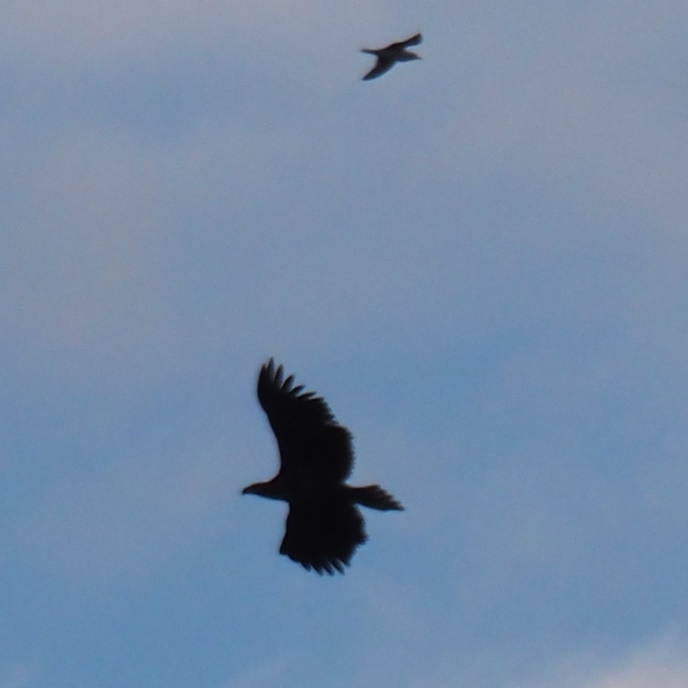
These sea eagles, on the other hand, near Finnkirk Rock, were the real McCoy: I will come to tge rock in #3


And that ends #2

I have already created the stub for #3, but nothing much there, just yet.


Monday, 4 December 2023

The apprentices who were taught nothing

This is another sample from the work I have just completed, Keeping People is Wrong.

The Colonial Secretary in Sydney, Alexander M’Leay announced in 1831 that a bunch of colleens were about to arrive and would be divided up among the deserving rich. They would not be slaves, though; they would be paid just over nine pence a week (though they would not be allowed to spend any of it, until they were out of their indentures).

Some girls about fifteen years of age were to be sent from “one of the Public Institutions in Ireland, where they have been brought up with much care and attention to their moral and religious duties; and it being desirable that they should be disposed of in a manner the most likely to render them useful members of society…” In other words, these would be convenient and obedient servants, and the governor wanted to know who would like one, given that they would be bound as apprentices.

*

When slavery was abolished in British colonies on 1 August 1834, 770,280 slaves became free, and a number of sops were thrown to the slave-owners. First, they were massively compensated for their “property loss”, but then they were not stripped of their property at all. The African slaves were just “apprenticed” for six years. They were semi-dependent on their masters for that period of time, while having some rights as free men, and not able to be sold.

The idea was to “prepare” them for the responsibilities of free labour and economic independence (we will see that this is a recurrent theme, whenever a downtrodden group seeks proper pay: “You aren’t ready for it, all that money will go to your head, it will spoil you…”)

The “indentured Negroes” were blunt, wondering why it should take them six years to learn what they had been doing all their lives. So there was form for using indentures to entrap, or maybe even enslave. It became common in the 19th century to muddle up the indentures of apprenticeship with the indentures of a one-sided labour contract, the idea being to imply that the victims of indentured servitude were bound, hand and foot, to do the will of their rightful masters.

*
A girl apprentice

All too often the indenture system was used, not to train apprentices, but to create an underclass of manual labourers and domestic servants. Sarah Rankin appears to have been one such victim, coming from the Randwick Asylum for Destitute Children, which was created to care for abandoned children or for those whose parents were ‘dissolute characters’. Single parents could place children there if they paid a fixed sum for the child’s maintenance, but we have no information on how Sarah ended up in the Asylum.

It was neither an orphanage nor a workhouse, but Randwick was not pleasant. In 1867 there were 77 deaths there from whooping cough, so perhaps Sarah Rankin was lucky to be apprenticed from the Asylum to Julien Scriber—or was she all that lucky? For starters, Julien (or Jules or Julius) appears to have had no trade, although he had a farm and some cattle, and the apprenticeship was for six years. There was also a Mrs Scriber, whose behaviour led Sarah to write a letter to the Asylum,

…complaining of ill-treatment by Mrs. Scriber, and stating, that in consequence of ill-usage, and a fear that Mrs. Scriber would kill her, she had left.
The Kiama Independent, and Shoalhaven Advertiser 3 August 1877, 2.

The Kiama Police court was told by Mr Connell (P.M.) that there would be no difficulty in obtaining another more suitable place, and she had asked for permission to do so. On the other hand, there was a second letter from Mr Scriber to the Asylum stating that Sarah Rankin had, without just cause or reason, left his indentured service, and requesting either that she be sent back, or he be released from his responsibility in regard to her.

In evidence, Sarah said she had no fault to find with Mr Scriber, who was a kind master, but Mrs Scriber was so violent of temper and had abused her so that she could not and would not live with her. There were times when Mrs Scriber had knocked her down, dashed her against the fireplace, dragged her by her hair, kicked her, beaten her with a whip, and threatened to kill her.

Mrs Scriber said the girl had been in their service for nearly three years, and had been a good, willing servant until about three months ago, when some relationship was discovered between her and the Boyles, who were neighbours. After that she had been saucy, indolent, careless, and apparently under some sinister and adverse influence. She conceded that, under provocation, she chastised Sarah with a small riding-whip (which she produced), the same as she would chastise her own children; but it was absolutely false to say she had knocked her down, dragged her by her hair, kicked her, or threatened to kill her.

Mr Scriber said Sarah had never wanted for money or clothes, and at the end of each year he had paid her the balance of pocket money due to her. This applied to the first two years only, as the third had not yet expired. He was willing to take the girl—who was now living with Mrs Boyle—back again if she promised to reform, or he was willing to agree if the indentures should be cancelled.

Sarah Randall [sic!] stoutly and pertinaciously denied ever having received a farthing of pocket money. On one occasion she went with the family to a picnic when the master paid 9d for her admission, and gave her 6d for herself, and that was the only money she had received.

Mr. Connell advised the girl to go back to her service, pending the decision of the Asylum Committee; but she absolutely refused to go back on any consideration, and Mrs. Boyle, who was present, said she would keep the girl till she got another place.
The Kiama Independent, and Shoalhaven Advertiser 3 August 1877, 2.

Anybody seeking further detail will need to know that Scriber (as he was listed in the newspaper) normally used his birth-name, Schreiber, and so far as I can find, this man's only 'trade' was farmer. Nothing in the evidence ever suggested that Sarah was being educated in any trade, and it is reasonable to suspect that her “apprenticeship” was just as much a sham as that of the slaves in the Caribbean four decades earlier. The indenture was no more than a fetter to tie her down.

Now we will look at some other cases, where the apprenticeship was clearly a sham for entrapment:

The Stolen Generations

The Stolen Generations were Aboriginal children taken away from their parents and families. The people taking the children away believed that Aboriginal culture was inferior to European culture, but many of the children they took away grew up feeling that they had no people, no family, no country, and no place. These four things are all a central part of a continuing culture in Aboriginal society.

Looking back, it now seems very cruel to take children away from their parents, so why did white people do it? As well as wrongly believing that Aboriginal people were inferior, many thought that the Aboriginal race would die out. They also believed, again wrongly, that all Aboriginal people had black d Aboriginal children had ‘white blood’ and therefore needed to be ‘rescued’.skin, like many of those in the Northern Territory. So they assumed that any pale-skinne

Saving the children
Some Aboriginal adults worked out ways to stop the government from taking their children away. For example, children would be encouraged to sit quietly in a hole in the ground, covered by a few pieces of corrugated iron, when “the welfare” came to find children to take away.

I had this horror tale from a work colleague, who told me that as a child, she had a problematic pale skin, not unusual in her kin group, far paler than the skin of the “full bloods” of the Northern Territory. If they saw her, “the welfare” would have concluded she was ‘part white’, and torn her away from culture and a loving family. So she hid, patiently.

Most of the people who took the children of the Stolen Generations from their parents sincerely believed they were doing the right thing. When the truth came out, most of the few white participants who were still alive were upset to learn what harm they had really done.

The children who were taken were placed in 480 institutions with differing degrees of gentleness, and many were fostered or adopted by non-Indigenous families. Many were given new names and forbidden to speak any language but English and there was little or no formal education, because they were expected to become manual labourers or domestic servants.

Around 1900, a gullible writer claimed that on cattle stations indentures protected Aboriginal women. The agreements had to be witnessed by either Resident Magistrates, Justices of the Peace, persons appointed under the Act, or officers of the police force. These people, said a letter writer, just a little bit naïvely, were unlikely to witness an agreement between employers and natives unless the natives were willing to make such agreement, and were under no fear, coercion, or constraint.

Until 1900, the Police Act had made it an offence to tamper with or detain another person’s native servant, and a breach led to a fine of from £20 to £40, when costs were added in. The writer then cited a case where a white man in the Gascoyne district had lured away “a rather nice looking native girl”. Her employer took out a summons, the man was fined, and the girl was ordered to go back to her service “where she is still”.

This was too much for the editor, who did the sums and expostulated: “Still there after eight years; the 12 months agreement is evidently pretty durable.” Men, on the other hand, were “caught and apprenticed to a kind master at about nothing and sixpence a year”, said a writer in The Bulletin, as quoted in a Perth newspaper.

Westralia is proud of its slave system on the ground that it prevents native girls being led astray by wandering white men of the swagman and prospector description [but] doesn’t make the seduction of aboriginal girls a punishable offence. It doesn’t protect them to any extent that is worth a straw against their own white boss, the squatter. Before they are “apprenticed” or enslaved, or after their period of enslavement has expired, the law takes no notice of their morals, and does nothing in particular for their protection.
— West Australian Sunday Times 1 April 1900. 8 (taken from The Bulletin).


Wednesday, 27 September 2023

The smelter and the smith

 Here is a peek from a new assemblage, a large historical background to science. It is the stuff that did not fit in my Murdoch Book 100 Discoveries, or 100 große Sprünge: Die bedeutendsten Entdeckungen und Erfindungen der Menschheit, (Spektrum Akademischer Verlag).

The idea is to look at the enabling knowledge that opened up science for us.

There were seven metals known in ancient times: gold, mercury, tin, lead, silver, copper, and iron (on rare occasions, it was found as the metal in meteorites). Most of the time, people who wanted to get some metal had to treat an ore in some way, to smelt it to get the metal. Around the same time that coiled pots were showing up around Çatal Höyük, people began to smelt lead, copper and other metals from their ores. The copper might have been from deposits of copper metal (‘native copper’), but lead beads from the same area must have been smelted from lead ore.

A suitable ore had to be available, and then somebody needed to find or know a way to smelt the ore and use the metal. Zinc has probably been smelted in India for at least 2300 years, maybe 3000 years, but the first European zinc was only prepared in 1736 (possibly using technology learned from India, as the method was identical). In the Middle east, where copper ore was available from Cyprus, the early Bronze Age coincided with the start of writing and the development of city states, but bronze was probably in use even earlier, in what is now Thailand.

In some places, like sub-Saharan Africa, there was no Bronze Age at all. People jumped straight from the New Stone Age (Neolithic) direct to the Iron Age, probably because they had iron ore but no copper ore, though perhaps the iron technology was imported. Iron was probably being smelted and worked in the Middle East around 1100 BCE, and it appeared 600 years later in West Africa.

Tin could have been smelted by accident if the right rocks were used to make a fireplace. People say copper and lead might have been discovered the same way, but this is unlikely, because copper smelting needs 1100°C and carbon monoxide to reduce the oxide to metal.

Lead could form by accident if a piece of the ore became buried in the ashes with limited oxygen, but both copper and lead were more likely to form in a potter’s kiln. One attractive theory is that potters began decorating their pots with minerals to add colour, noticed the metals that formed on the pots, and began experimenting.

Charcoal is dry and has 10% of the mass of the wood it came from, so charcoal fires burn hotter, if they have enough (but not too much) oxygen. With good charcoal and the right amount of air, a temperature of 1500°C is possible if the fire is surrounded to keep the heat in. An open fireplace with coals is unlikely to get higher than 600°C, even when a high wind blows through it, because the same high wind that promotes burning also carries away much of the heat. In other words, making metal needed the heat of a kiln or an oven, not the heat of an open fire. It was an art, not luck.

Copper is a soft metal, good enough to make maces but not blades, so Çatal Höyük is generally referred to as a chalcolithic site, a place where copper and stone were both used. Somewhere, somehow, somebody learned to make bronze, an alloy of copper with arsenic or tin. The earliest examples of copper/arsenic bronze come from Asia Minor in about 4200 BCE, while the harder copper/tin bronze was used from about 3200 BCE.

We can come up with plausible yarns to account for people making copper metal, but iron remains a bit of a mystery. It has a strong attraction to oxygen, which is why iron rusts so easily, and why iron oxide is a common iron ore. At around 900°C, the oxygen is more strongly attracted to carbon, so if iron oxide is collected from a bog or some other place, it can be converted to the metal. It takes a great deal more heat to melt iron, but the metal that forms at 900°C can be hammered and worked in a bloomery, and shaped into tools.

Smelting and refining did not always bring blessings. Cores taken from lake beds in the Andes reveal that Peruvians were smelting copper 1000 years ago, but around the year 1450, they switched to silver, which leaves a different pattern of pollution. They probably began smelting more silver because the Incas demanded that taxes be paid in silver. When the conquistadors took over in 1533, the silver-smelting pollution increased tenfold.

The ice of Greenland shows clear traces of pollution from copper production, dating back to about 500 BCE. This probably came mainly from the production of copper and bronze around the Mediterranean, even as they entered the Iron Age. The real advantage of iron was that it was cheap and easy to make iron weapons in large numbers. Even if gentlemen preferred bronze, a thousand poorly-trained peasants with shoddy iron stabbers can overwhelm 300 trained warriors with superb bronze swords.

In the end, a smith needed to shape and toughen the metal.

Shipping may also have been a factor. Ships would certainly have been up to carrying Cypriot copper ore or metal by 2000 BCE, possibly much earlier, but it is tempting to wonder if tin or tin ore was being carried to the Mediterranean from Cornwall by then: tin was certainly being mined and worked in Cornwall in about 2150 BCE. All around, the general picture of early metal working is clear, but many of the finds leave us still wondering. From Weland to Ogoun to Cullann to mpu Gandring, in many cultures (look them up!), the smith is seen as having the powers of a magician—and no wonder...


Monday, 19 June 2023

They truly belonged

The magistrates of colonial Australia were, as we say, a rum bunch, and many of them were bent. The blue text is extracted from chapters 14 and 14 of Involuntary Belonging.

We have already seen something of how Aborigines were treated, as serfs that came, with the land, belonging to the new possessor of the land. This held, even when the land was taken without the permission of those who, in the law, we are now more likely to recognise as the rightful owners, but there is more that needs to be said. It is possible that the Aborigine did indeed belong to that Country, but he also seems to have been treated as a possession to the extent that any gold he found belonged to the new ‘owner’.

Around 1900, a writer claimed that indentures protected Aboriginal women. The agreements had to be witnessed by either Resident Magistrates, Justices of the Peace, persons appointed under the Act, or officers of the police force. These people, said a letter writer, just a little bit naïvely, were unlikely to witness an agreement between employers and natives unless the natives were willing to make such agreement, and were under no fear, coercion, or constraint.

Until 1900, the Police Act had made it an offence to tamper with or detain another person’s native servant, and a breach led to a fine of from £20 to £40, when costs were added in. The writer then cited a case where a white man in the Gascoyne district had lured away “a rather nice looking native girl”.

Her employer took out a summons, the man was fined, and the girl was ordered to go back to her service “where she is still”. This was too much for the editor, who expostulated: “Still there after eight years; the 12 months agreement is evidently pretty durable.” Men, on the other hand, were “caught and apprenticed to a kind master at about nothing and sixpence a year”, said the writer in The Bulletin, as quoted in a Perth newspaper.

Westralia is proud of its slave system on the ground that it prevents native girls being led astray by wandering white men of the swagman and prospector description [but] doesn’t make the seduction of aboriginal girls a punishable offence. It doesn’t protect them to any extent that is worth a straw against their own white boss, the squatter. Before they are “apprenticed” or enslaved, or after their period of enslavement has expired, the law takes no notice of their morals, and does nothing in particular for their protection.

During their spell of slavery it doesn’t protect their morals either, but it falls like Sodom and Gomorrah on any bad man who beguiles them away and thereby deprives the good boss of their services. And it is presumably out of the ‘Groper law’s anxiety to preserve the morals of the aboriginal girl that it compels the aboriginal man to also work for the squatter as his “apprentice” at nothing or thereabouts per annum — at least it doesn’t actually compel him, but when [offensive word]s are scarce an obliging J.P. is generally at hand to gaol the aboriginal for vagrancy till he consents, of his own free will, and quite voluntarily, to be indentured.

The Westralian boss magnates have always had a great yearning after the [offensive word]’s soul, and in the early days they couldn’t, sleep at night for wondering how to save the local black girl in the Altogether [i.e., naked] from being led astray. Then it dawned on them that the best way to save her soul was to make her work darned hard without anything that could be called wages, and in consequence of this discovery their minds have been at ease ever since.
West Australian Sunday Times
1 April 1900. 8 (taken from The Bulletin).

Not sickened yet? Try this, but be warned that it is unpleasant reading, which is why, among family and friends, I call this Bog-snorkelling in a cess-pit

In September 1897, Ernest William Anderson, one of the proprietors of Bendhu Station in the Pilbara, reported to the officer in charge of the local police that on the 13th, three aboriginal natives, identified as Spider, Biddy, and Polly, had died at Bendhu. Their names were actually Pringamurra, Warradamngenmia, and Narilung. These three, and three others who survived, had “escaped” (), so Alexander Anderson went in pursuit of them and

… encountered them at Redbank, 24 miles from Bendhu. He persuaded them to return, leaving the following morning for home. He arrived at the station at half-past two that day, having, it is stated, walked the absconders the distance of 24 miles without water. It is further alleged that on reaching the homestead the natives were soundly thrashed by the Anderson Brothers with a piece of half-inch rope, and were then allowed to drink water from the well. Shortly afterwards they sickened, and the three of the aboriginals first named died about six o’clock that evening.
The West Australian, 23 September 1897, 5.

When you read this, note that the victims “escaped” and were then “persuaded” and later “thrashed” . To me, that is a state of slavery, pure and simple, though they weren’t traded, so far as we know. Maybe, just barely, it was not slavery in the strict sense.

Anderson reported the deaths to the police, suggesting that the victims died from being overheated and then swallowing too much water. Sergeant McCarthy notified the Coroner, and sent a constable to proceed to collect information from witnesses and make arrangements for an inquiry. Later, the District Coroner travelled to Bendhu, and, obtaining a jury of three at Bamboo Creek, conducted an investigation into the case.

The jury returned a verdict that the deaths were caused by exhaustion caused by travelling the deceased natives from Redbank to Bendhu without water. They added a rider, censuring the Andersons for the manner in which they had beaten the deceased people. The coroner also examined two of the survivors, girls aged 8 and 12, and squeamish readers may prefer not to read this next paragraph, even though you really should:

… both appeared to have been severely beaten, the former’s back being one mass of festering wounds of the color of sunbaked clay. She presented a pitiable spectacle, whilst the aspect of the elder girl Louie, was not much less deplorable … The Anderson Bros. are but young men, the elder, Ernest, being about 21 years of age, whilst the younger, Alex, would be something like 18.
The Pilbarra Goldfield News (Marble Bar) 1 October 1897, 2.

On 19 October, the brothers were behind bars, held on a charge of murder. Alexander had arrived with a case of typhoid fever, and this killed him on 30 November. Alexander was on trial on December 20, when evidence showed that Pringamurra’s shoulder blade had been broken. The evidence listed the wounds on both the dead and the living, and no witnesses were called for the defence. The prosecutor summed up:

It might be argued that the charge could be reduced to one of manslaughter had the deed been done under sudden and great provocation, but when such deliberate and barbaric violence sufficient to cause death had been proved he could not see how that would be possible.
The West Australian 22 December 1897, 3.

As there were no witnesses for the defence, there will be no recounting here of the weasel words added in defence, but sadly, they had an effect. The jury brought in a verdict of guilty of manslaughter. Anderson had eluded the noose, but he still had an incandescent Chief Justice, Sir Alexander Onslow, to descant on his case:

Ernest William Anderson, the jury have taken a very lenient view of your case. Nobody who has heard the evidence given in this case can have a shadow of a doubt in his mind about the crime in question. Your crime is nothing but a deliberate, brutal, base and cruel murder of a man and two women, and an inhuman flogging of mere girls besides. However, the jury have done what they have in law a right to do, and it remains only for me to pass sentence upon you. That sentence is the most severe I am able to give-you are sentenced to penal servitude for life.
The West Australian, 22 December 1897, 3.

On 10 February 1903, Anderson was allowed out on a ‘ticket of leave’ arrangement. As they say about policemen, there’s never a touch of typhoid fever around when you need it, and if that comment seems harsh, Onslow would have agreed with me, given the way he weighed in again the very next day after sentencing the surviving Anderson, at the start of another trial:

But I cannot forget that only 18 months ago I myself tried a case at Geraldton when a man named Thompson was charged with flogging a native to death. The circumstances of the case were equally revolting to that of the Andersons, the great difference being that in Thompson’s case one man instead of three was flogged, and there was also no inhuman beating of females.
The West Australian, 24 December 1897, 6.

This reference pleased me, because while I had seen and been chasing references to “Thompson”, the name is common, so the details had eluded me, but that one word, “Geraldton”, gave me a way in. The case went to court in July 1896, when Ernest Waugh, George Thompson and William Purtill flogged ‘Micky’, an Aboriginal described as “a fighting man” who took no nonsense from white men, giving as good as he got. He was overpowered by the three, and chained to a verandah post before Thompson and Waugh whipped him.

The next piece of evidence should serve to quell any doubts about whether or not the rank smell of slavery in the air at that time.

James Aitken, affirmed in the Scotch method, said: — I am a Justice of the Peace, as well as a squatter and merchant, and know the accused, who bear a good character. I have never heard of any complaints about them. I have 65 natives in my employ. Occasionally I find it necessary to punish them in order to maintain discipline.

His Honor: What do you mean by punishing them?

Mr. Aitken: By thrashing them.

His Honor. — With what?

Witness: — With a piece of leather trace. I have heard what Micky did to Waugh, and I certainly say he deserved punishing for what he did.

His Honor: You are a magistrate of the peace. What do you suppose they are appointed for? Do you think they are appointed for the purpose of illegally punishing natives? Let me urge you to seriously consider the position you have placed yourself in in giving your opinion that it is right and proper to take into your own hands the duty of punishing natives. I am quite shocked to hear a Justice of the Peace express himself in this way.

Mr. Aitken: I am quite prepared to resign my Commission at any time. We have to tell the truth in a Court of law.
Geraldton Advertiser, 10 July 1896, 3.

All three were found not guilty. The papers of the later 1890s always seem to link the names Anderson, Thompson and Brockman. We need just one more look, though, to seal the case for the prosecution, but the better informed papers also add the name De Pledge, so one more for luck. Interestingly, like Mr Aitken, De Pledge and Brockman were also magistrates. The prosecution rests.

George Julius Brockman, of Minilya station, was charged in February 1899 with ill-treating an aboriginal named Cooardie. The treatment involved placing Cooardie in stocks for an afternoon and night without food, then kicking him on the head, and flogging him.

The evidence came from the complainant, two other natives, and a Japanese, employed by the defendant as a cook. Cooardie’s story, largely corroborated by his witnesses, was that he was put in the stocks one afternoon and was kept there, in a fowl house, all through the night.

Cooardie escaped the fowl house, but not the stocks, and when Brockman discovered him, he was kicked about the face, and bled from a wound. He was returned to the fowl house and in the morning, with the stocks still on his legs, he was flogged with a whip made of strips of bullock hide. His offence, Cooardie said, was that he had taken a native woman named Maggie, with whom, he said, the defendant had intimate relations. Two natives, Jackie and Billie corroborated the complainant’s evidence. The Japanese cook, Cawabila, saw the complainant in the stocks, and saw him beaten by the defendant with a bullock hide whip. He did not witness the kicking, but when he entered the fowl-house blood was flowing from a wound on Cooardie’s face.

Brockman gave evidence on his own behalf, and his version differed. Yes, he had put Cooardie in the stocks, but could not have kicked him as he had no boots on. The cook, on the other hand, said the boots were on.

Brockman continued. He punished Cooardie, not in connection with the woman Maggie, but because he had attempted to assault an old blind woman. In cross-examination, he admitted telling Corporal Turner that the thrashing was administered because Cooardie had stolen a pair of boots from a contractor named Hough, and that he had made no mention of the old woman.

The contractor Hough gave evidence that during the five years he had worked for Brockman, he had never known him to ill-treat a native. The defendant had admitted enough ill-treatment to sustain the charge, and the Bench, consisting of the Resident Magistrate and three Justices of the Peace, fined the accused £5, ordered him to pay costs to the amount of £9 8s., and cancelled Cooardie’s indentures.

Brockman was a J. P., so he accepted his loss, and then took his seat on the bench, to hear a charge against a Japanese man of supplying liquor to an Aboriginal! That brings us to another J.P., Thomas De Pledge, who along with his employee, Reginald Orkney, was charged with assaulting aboriginal natives, a man and a woman, who were indentured to them. Remembering Brockman’s ‘Maggie’, the man De Pledge had flogged said that it was because he had taken away ‘his woman’. This whole saga begins to read like 19th century USA, with concupiscence in the slave quarters.


Bridges and voices

 As I emerged from a period of intense work on not one, but two books on Australian history, I found a battle going on around me about something that should be a slam dunk 'yes' vote: the Voice to Parliament.

I mentioned this to a colleague volunteer on North Head (we both do land care work), and she said the Voice referendum was just like having a referendum on whether or not to have a Sydney Harbour Bridge: a vote in favour would have enabled planning and design to go ahead, but it would say nothing about the design. It was just do we want a bridge or not?

Just as we would leave the next step to the engineers, lawyers and politicians would be the people best qualified to make the Voice work. Rabbiting on about "Oooh, we might get sued" is really saying "We are such numpties. any legislation we design will be like a dunny made of balsa wood." It is, if I may use the vernacular, bollocks.

I ducked back into history for a bit at that point. Did you know that the bridge was foretold in 1789? The sage words came from Erasmus Darwin, Charles' grandfather, who had a famous link with Sydney.

When Governor Phillip sent some Sydney clay back to London in 1789, Josiah Wedgwood created a medallion depicting Sydney Cove. An engraving of this appeared in Phillip’s The Voyage to Botany Bay along with a verse by Erasmus Darwin called Visit of Hope to Sydney Cove. Here, we see the engraving from the book

Now here is a portion of Erasmus' appalling version of poetry, and if you squint slantendicularly at it, you may even be able to detect the Harbour Bridge and even Manly ferries in the text:

There the proud arch, colossus-like, bestride
Yon glittering streams, and bound the chasing tide;
Embellished villas crown the landscape-scene,
Farms wave with gold, and orchards blush between.
There shall tall spires, and dome-capped towers ascend,
And piers and quays their massy structures blend;
While with each breeze approaching vessels glide,
And northern treasures dance on every tide!”

In 1815, Governor Lachlan Macquarie’s architect, Francis Greenway, suggested building a bridge from the south shore to the north shore of Sydney Harbour, but there was no real need for a bridge then. Later, when all the good farmland at Parramatta had been taken up, a few people discovered that the sandstone ridges running north had small caps of shale that made the soil good enough for market gardens, and so settlements developed along what is now the North Shore railway line.

That line opened in 1890. As soon as it did, people began building houses along it. After 1893, they could catch a train to Milsons Point and cross the harbour by steam ferry. People began talking about having a harbour crossing. Here is Benjamin Crispin Simpson's design: the caption is a link to the SLNSW original.

State Library of NSW.


In 1900, a group of politicians tried to get an agreement to a proposal that the Duke of York would lay the foundation stone for a harbour crossing while he was visiting Sydney for the inauguration of Federation in 1901, but the proposal failed to get the nod.

The talk in Sydney in 1900 was mainly about a railway bridge, high enough so that ships could go underneath it. A plan was in place by 1911, and John Bradfield was appointed chief engineer of the project in 1912. By 1916, his design was ready, but it was the middle of the Great War, so the work was delayed.

From 1900 on, motor cars, motor lorries and motor omnibuses had all become important forms of transport, as had trams. It was decided that the new bridge needed two train lines, two tram lines, and as many lanes for road traffic as possible. In the end, Bradfield allowed for what then seemed like the huge number of six traffic lanes!

Building took from 1923 to 1932, when the Bridge opened, and there was never a referendum, because everybody knew we needed a bridge, just as we need the Voice to allow us to stand among the rare decent nations of the world.

My next post will be a small excerpt from what I am pitching under the title Involuntary Belonging, a close look at indentured and enforced servitude in Australia (and even a few cases of slavery in Australia). 

If you don't think we need the Voice, that post may make you think again, as will this image, taken from the Sydney Morning Herald in 1852:


Sunday, 31 July 2022

Women wearing trousers

I thought I had posted this excerpt from my Not Your Usual Australian Villains, but apparently not, because somebody posted a related short article on FB, and I went looking for this rather more detailed exploration. Hey ho, here it is, and as you can see, some of my 'villains' weren't that evil:

———

Was it ever against the law for women to wear trousers? The answer is “probably not”, even if we know of at least one convict who was wearing male clothes when she was arrested.

That was the lady you can see on the Australian $20 note, Mary Haydock, later Mary Reibey, who was convicted of horse theft in Britain in 1790, but what horse thieves did, the ladies of the upper classes in England did as well, soon after. Up until 1820, London women could attend debates in Parliament, but then they were almost excluded from the House of Commons and entirely barred from the House of Lords. Some of them found their way around this, said The Sydney Gazette and New South Wales Advertiser:

Curiosity has, however, sometimes defeated this selfish order; and, in the disguise of male attire, many ladies of respectable rank in life, have for whole nights enjoyed the pleasure which, in former times, was to be derived from the animated debates of this enlightened body. [i]

When Sarah Webb joined her husband William in an 1826 robbery (which probably entitles her to be called the first woman bushranger), she wore men’s clothes. Then there was Margaret Donnally, a convict who absconded in male attire in 1827, and got six months in the female factory for doing so. It may be worth noting, before reading the following, that in those days, trousers and breeches were commonly coyly referred to as “inexpressibles”.

It is no new thing for ladies to assume the breeches when they would escape from servitude and throw off its yoke: moreover it is oftentimes a very successful plan. Now Margaret Donnally, not liking a far-away up-country life, determined to try this plan; Achilles’ petticoats thought she, are upon record, why not Margaret Donnally’s inexpressibles. [ii]

Given that she was arrested heading for Sydney, it is likely Donnally’s offence was going AWOL, rather than cross-dressing. An unapproved bid for freedom was probably also behind the charge levelled at an unnamed servant girl who was caught, out and about in men’s clothes, in 1829. Here is how it played out, according to The Australian:

An assigned female servant to Mr. Shaughnessy, undertaker, was charged with absenting herself from her master’s service. The girl had indulged herself in a freak which ended in a watch-house. A constable who was induced to take a ramble in the domain, to enjoy a little fresh air, happened to come full butt when turning a corner, unexpectedly with the frail one. Her appearance at once denoted her to be worth a salute. Good morning, says the man — but oh what a silence — what a pause. The woman knew the man, but he just then did not know his customer. A little time however sufficed to make them close acquaintances — a feminine tone of voice discovered to the prying notice of the constable that under the assumed male attire there was something of frail woman. She was walked off to a watch-house. Mr. Jilks, the chief constable, was immediately sent for, and to him was assigned the privilege of making an enquiry into the matter. [iii]

The woman confessed that she was in disguise, and had left her master’s home, using her disguise to avoid detection. She was sentenced to one month in the Female Factory. Incidentally, Sarah Webb was not the only woman to go bushranging, as two others were mentioned in the same paper in 1835:

The bushrangers are still at large about the Liverpool Road They have been seen within the last two days by one or two persons in that neighbourhood, and are reported to be partially armed; the two men with two women in male attire, were last heard of as having taken up their quarters at a place called Rocky Point, down towards George’s River. [iv]

Clearly, there was a sense that these women in trousers were up to no good in some way, and it was probably her trousers which drew Sergeant Toole’s attention to Mary-Ann Grenaine in 1851. There was no such offence as being drunk in charge of trousers, but Toole was clearly not impressed with what Empire called “a little undersized, pug-nosed creature, about sixteen years of age”.

Instead, she was charged with drunkenness and disorderly conduct in York-street, on the morning of Friday 14 November. She was in male attire the paper said: not exactly the ‘bloomer’ costume that was then exciting people in Philadelphia, but arrayed in blue jacket and trousers, with a neat little oilskin hat upon her head.

He found the prisoner drunk outside Mr. Entwistle’s Hotel, in York Street, where she “was dancing the sailor’s hornpipe to the great enjoyment of the mob”. He knew where she got the clothes, said a report in Empire:

… a person named Geddes, had called at the female watch-house about the clothes in which the prisoner was dressed, and it appeared that Geddes had slept during the previous night with the prisoner, who arose very early on Friday morning, while Geddes was snoring, dressed herself in his clothes, and left her gown, bustle, petticoats, &c. [v]

The prisoner pleaded with the magistrate to let her off, so she could return the clothes, which she had only taken for a joke. The Police Magistrate ordered her to post bonds for her good behaviour for six months, one of £10 from herself, and two sureties of £5 each, or be imprisoned fourteen days.

On the other hand, “Harriette Walters” was apparently a virtuous young woman who adopted male garb to avoid unwanted attention as she waited for her husband to arrive in Australia, according to Ellen Lacy. Mrs Lacy was neither a chronicler nor a historian, rather, she was a writer of almost factual fiction, and she made it clear that Harriette’s name was something else, but insisted that the story itself was true.

The circumstances are easily told: Harriette and her husband were ready to sail for Australia, but Harriette stayed behind to care for a dying relative, who was expected to last for some months. Their plan was that after the relative died, she would follow her husband to Australia, but almost as soon as her husband’s ship left the wharf, the relative died.

Harriette finalised the relative’s affairs, hurried to the docks, but missed her husband’s ship, and then by chance, found a faster passage — something that could happen in the days of sail. She reached Melbourne before him, so she was alone in a strange and expensive city. It was not a good place, said Mrs Clacy, for any female to be without a protector.

… even the family with whom she had come out, had gone many miles up the country. She possessed little money, lodgings and food were at an awful price, and employment for a female, except of a rough sort, was not easily procured. [vi]

Harriette had a slight figure, so she adopted the usual colonial costume worn by men: loose trousers, a full, blue serge shirt, fastened round the waist by a leather belt, and a wide-awake hat, which was a broad-brimmed felt hat. Pretending to be a young lad, just arrived from England, she found light work near the wharf, and was there for about three weeks at a salary of a pound a week with board thrown in, along with permission to sleep in an old tumble-down shed beside the store.

When her husband arrived, he did not recognise her at first in her unexpected clothes, and when he said he was bound for the Bendigo diggings, she put her foot down. There would be no further separation, and while the others in their party knew her secret, she remained dressed as a boy until their arrival at Bendigo.

There were quote marks in the 1851 reference to the ‘bloomer’ costume in Mary-Ann Grenaine’s trial. The quotation marks tell us the idea was new then, but by 1860, the Bloomer revolution was old news. Here, Emma Macpherson is writing of the floods that used to roar through Melbourne:

… at the time of my visiting it, the gentlemen had pretty generally adopted the fashion of high waterproof boots, by the aid of which and by washing them at intervals in these flowing rivers, they walked about the streets in tolerable comfort; but as this fashion had not extended to the ladies, the condition presented by their long flowing dresses was pitiable in the extreme; I really think they will have eventually to adopt the Bloomer costume, which, if allowable under any circumstances, would certainly be so there, for the purpose of traversing these terrible quagmires. [vii]

Her point, when you come down to it, is that clothing needs, above all, to be practical. Sour, grumpy old men might object to women in trousers and mutter about the Monstrous Regiment of Women, but in time, practicality would win out, and later generations would wonder why their ancestors had been so upset.

No fashion is ever entirely wrong, even the crinoline, which used up public space rather savagely. The evidence in its favour comes from Elizabeth Ramsay-Laye, who missed her footing as she went to step into a boat, and was saved by her crinoline:

I had but to walk across a fallen trunk which projected over the bank, to get into the boat, when, depending for support too much on a branch overhead, it gave way, and in an instant I was floating in deep water down the stream, my crinoline acting as a life-preserver; for up it went with my dress, like a balloon, presenting, I have no doubt, a most ludicrous appearance. My friend immediately pushed off to my assistance, caught my arms, and told me to jump into the boat, which I easily accomplished, my petticoat aiding me in the most extraordinary manner. Although I had been up to my waist in water and my under-garments were saturated, my dress was scarcely wet, owing I suppose, to the same friendly but much-abused crinoline! [viii]

For the most part, the crinoline was an impractical garment, especially at colonial sporting events which were often a bit on the raucous side. At the Copenhagen Ground in Ballarat in the summer of 1862, one of the events for men was a wheelbarrow race in which the competitors pushed ordinary wheelbarrows while blindfolded. With the exception of the winner, William Brown, the field scattered, and some of them collided with each other, while others hit the fence or the grandstand, and one was wounded when he ran into the dancing platform.

Obviously, no woman could have taken part in the wheelbarrow race in a crinoline. Still, two of them thought they could try running, said the Ballarat Star:

About three o’clock an amusing incident occurred on the ground, being no less than a 100 yards race between a lady from Ballarat and another resident in Buninyong, and, as may be imagined, the affair caused much merriment. The crinolines of this pair of pedestrians, however, somewhat retarded their speed, and before they had got fifty yards they gave the matter up in despair, one especially in consequence of her obesity being considerably “blown.” [ix]

All the same, women must have occasionally worn male clothing in bush areas. The naturalist, artist and writer Louisa Atkinson apparently caused an unspecified stir among the ladies of Kurrajong when she was wandering the bush in the 1860s, and that almost certainly means she was wearing trousers. Luckily, her Good Works in other directions effectively muzzled the venomous mouths of the vicious old biddies.

I think I can see some of Henry Lawson’s prose style in Atkinson’s writing. He was only five when she died, and by the time he was being published, Lawson could be matter-of-fact about cross-dressing in cases of need, as we can see in The Drover’s Wife, published in 1892:

The rain will make the grass grow, and this reminds her how she fought a bush-fire once while her husband was away. The grass was long, and very dry, and the fire threatened to burn her out. She put on an old pair of her husband’s trousers and beat out the flames with a green bough, till great drops of sooty perspiration stood out on her forehead and ran in streaks down her blackened arms. The sight of his mother in trousers greatly amused Tommy, who worked like a little hero by her side, but the terrified baby howled lustily for his “mummy.” [x]

Ten years later, when Lawson wrote a prose version of his ballad The Fire at Ross’s Farm, it was still daring to cross-dress in public. In the story, Old Watt was a squatter, Ross was a selector on Watt’s run, and they were therefore enemies. Mary Watt grew fond of Bob Ross, the selector’s son, but she declared that she would never marry. Then came a bushfire at Christmas, threatening the selector’s 10 acres of wheat. Mary asked her father to help Ross, he refused, so she rode off, against his orders, to help.

Mary saw Ross and Mrs Ross and the daughter Jenny, well up the siding above the fence, working desperately, running to and fro, and beating out the fire with green boughs. Mary left her horse, ran into the hut, and looked hurriedly round for something to wear in place of her riding-skirt. She only saw a couple of light print dresses. She stepped into a skillion room, which happened to be Bob’s room, and there caught sight of a pair of trousers and a coat hanging on the wall.

Bob Ross, beating desperately along a line of fire that curved down-hill to his right, and half-choked and blinded with the smoke, almost stumbled against a figure which was too tall to be his father.

“Why! who’s that?” he gasped.

“It’s only me, Bob,” said Mary, and she lifted her bough again.

Bob stared. He was so astonished that he almost forgot the fire and the wheat. Bob was not thin — but — —

“Don’t look at me, Bob!” said Mary, hurriedly. “We’re going to be married, so it doesn’t matter. Let us save the wheat.”

In the morality of the time, as he had seen her in men’s clothing, they must wed, but when her father and his men rode in to help fight the fire, she fled back to the house to change, before her father or his men saw her. The fire was beaten, and Lawson’s tale ended with a merry Christmas had by all.

… in after years they used to nearly chaff the life out of Mary. “You were in a great hurry to put on the breeches, weren’t you, Mary?” “Bob’s best Sunday-go-meetin’s, too, wasn’t they, Mary?” “Rather tight fit, wasn’t they, Mary?” “Couldn’t get ‘em on now, could you, Mary?”

“But,” reflected old Peter apart to some cronies, “it ain’t every young chap as gits an idea of the shape of his wife afore he marries her — is it? An’ that’s sayin’ somethin’.”

And old Peter was set down as being an innercent sort of ole cove. [xi]

Before 1900, most Australians bathed naked, but in a secluded place, and unless bathing as a family, they were segregated by sex, because being seen naked by the opposite sex was “indecent”. Here, Miles Franklin describes how, on a hot day, she and a number of girl visitors “… went for bogeys in a part of the river two miles distant…”

Aunt Helen always accompanied us on our bathing expeditions to keep us in check. She was the only one who bothered with a bathing-dress. The rest of us reefed off our clothing, in our hurry sending buttons in all directions, and plunged into the pleasant water. [xii]

Over time, swimming costumes were introduced, and both public and mixed bathing were allowed. We will return to bathing later, but what might be allowed on the beach remained indecent elsewhere. Then in 1928, women began to wear trousers, away from the shore, said the Hobart Mercury:

I hear that at George’s mannequin parade to-day the smoking suits invariably consisted of black satin trousers and embroidered sac coats. My informant tells me they are extremely becoming to women with straight legs, and that the only problem was whether ordinary straight bags or a sort of glorified semi-slacks were to be preferred. [xiii]

By 1930, women were engaged in active sport, and something had to give, said the Adelaide Advertiser.

Women have definitely taken to slacks and shirts for strenuous outdoor sport, and apparently Adelaide has not even been mildly shocked. [xiv]

What passed muster in the Antipodes could still shock Britons, though. Miss Yvonne Henry, of Haywards Heath (Sussex), lost her job in a chemist’s shop because she went to a dance wearing trousers instead of a skirt. Her employer had given her a pay rise before she went on holidays during 1931, but then a photo of the offending pants appeared in the press, and even the Adelaide Advertiser heard of what happened next.

Miss Henry was delighted, but the chemist happened to see the newspaper report and he wrote her a note in which, according to her mother, he said that her appearance in public wearing trousers offended against his religious principles and her services would no longer be required. [xv]

In 1932, Mrs Lucius Connolly, formerly Miss Jennie Falkiner, a prominent socialite from a pastoral family, returned to Australia after 16 months driving from Durban to Cairo and told her story to the Perth Daily News.

During her trip she wore riding breeches, or khaki slacks in hotter weather, and shirt. Shorts she avoided because of insect bites. They are very rarely worn in Africa. In the smartest hotels in Kenya and Tanganyika she was surprised to see women usually dressed in slacks and brilliant colored shirts, and very wide terai hats. Her own wardrobe for the trip included, besides her travelling kit, two tennis frocks, a skirt, and jumper, and a black lace evening frock. [xvi]

In 1933, Marlene Dietrich told the world she wore men’s clothing because it was comfortable, she looked better in those clothes, and “…it takes too much time; money, and trouble to be a well-dressed woman.” Soon other stars were, may I say it, following suit, and Greta Garbo, Joan Crawford and Carole Lombard were all doing it. [xvii]

By 1933, some women golfers were wearing “…a man’s orthodox grey flannel slacks to take part in the game” [xviii], but lawn tennis associations were concerned about men and women wearing shorts to play tennis. Women cricketers argued that the pads worn when batting or keeping wicket did not work with skirts, that they needed trousers.

Aldermen and councillors had the vapours over the amount of flesh exposed by the latest bathing costumes, [xix] but it was a bad time to be a wowser, because all over Australia standards were being eased.

Also in 1933, women in slacks might enter the nation’s House of Representatives, though not the Senate, [xx] but a few weeks later, Brisbane’s Lady Mayoress (Mrs. J. W. Greene), told The Queenslander that while she still disapproved of women drinking and smoking in public, her holiday attire would include slacks.

“As far as the question of modesty is concerned, I think slacks are a very modest form of attire, and it is how one behaves more than what one wears that counts.”

Asked whether her children liked the idea of her choice, the Lady Mayoress replied in the affirmative. “It is really just as much a matter of fashion for women as the wearing of plus fours is for men who play golf,” she added. [xxi]

In January 1934, a Barcaldine paper reported that in Canberra, Rev. Father Haydon was standing near the entrance to St. Christopher’s Catholic Church, Canberra, before conducting (such a man would never celebrate) a wedding. Seething with outrage, he stopped a girl who was in trousers and ordered her to “Go home and get properly dressed.” [xxii]

In country areas, men could only dream of leering and ogling at fresh young female bodies in trousers, but then in mid-1934, the drought broke. A west-bound train stopped at Kalgoorlie, and 50 members of the cast of J. C. Williamson’s musical comedy company’s show, The Girl Friend, stepped down: The Kalgoorlie Miner was excited:

Several of the young women created a sensation in Hannan street, by appearing in green, blue and grey slacks. [xxiii]

One might suspect that a clever publicist arranged that, but the window of opportunity would close, soon enough, as the unusual became the normal. Nine years later, under wartime conditions, the Prime Minister, John Curtin, allowed women Commonwealth employees to wear slacks to work “because of the difficulty in obtaining suitable stockings and the expense involved”. [xxiv]

Slowly, the opposition was wearing down. Your chronicler was a guest at the Royal Freshwater Bay Yacht Club in Perth in 1967, when a sailing colleague commented that a large majority of the people in the bar were “so far up themselves they can look out between their teeth to check the weather”. Your gentle chronicler politely and neutrally agreed that they were certainly not attired for sailing small craft on the Swan in winds gusting to 50 knots as we had been doing, but twenty years earlier, in 1947, what were the ladies wearing at the Royal Freshwater Bay Yacht Club? The Perth West Australian had the details:

Over 600 persons were present when the Lieutenant-Governor (Sir James Mitchell) officially opened the sailing season at the Royal Freshwater Bay Yacht Club on Saturday afternoon. Among the groups on the lawns and watching the regatta were representatives of the armed services and the commodores and flag officers of kindred clubs.

The frocking of the women was particularly varied and ranged from the bright slacks and linen suits favoured by the younger generation to neat tailor-mades and bright afternoon frocks, worn in some instances with wispy cocktail hats and long fur coats. [xxv]

Then in 1950, one of the last barriers fell, when women golfers at Royal Queensland were permitted to play in golfing slacks, on account of wet weather. [xxvi]

Now, all that is left is my friend Dorothy’s mystery of why schoolgirls are still required to wear skirts.


[i] The Sydney Gazette and New South Wales Advertiser, 16 June 1821, 3, http://trove.nla.gov.au/newspaper/article/2180325

[ii] The Sydney Gazette and New South Wales Advertiser, 27 March 1827, 3, http://trove.nla.gov.au/newspaper/article/2187932

[iii] The Australian, 3 February 1829, 3, http://trove.nla.gov.au/newspaper/article/36867060

[iv] The Australian, 30 January 1835, 2, http://trove.nla.gov.au/newspaper/article/42007890

[v] Empire (Sydney), 17 November 1851, 4, http://trove.nla.gov.au/newspaper/article/60125387

[vi] Ellen Clacy, A Lady’s Visit to the Gold Diggings, 136.

[vii] Emma Macpherson, My Experiences in Australia, 322 – 4.

[viii] Elizabeth Ramsay-Laye, Social Life and Manners in Australia, 106 – 7.

[ix] The Star (Ballarat), 27 December 1862, 2, http://trove.nla.gov.au/ndp/del/article/66329811

[x] Henry Lawson, The Drover’s Wife, in Short stories in prose and verse, c. 1894.

[xi] Henry Lawson, The Bush-Fire, in The Children of the Bush, 1902.

[xii] Miles Franklin, My Brilliant Career, 1901, 142.

[xiii] The Mercury (Hobart), 15 March 1928, 8, http://trove.nla.gov.au/ndp/del/article/24196300

[xiv] The Advertiser (Adelaide), 28 January 1930, 7, http://trove.nla.gov.au/ndp/del/article/73790854?#pstart7284530

[xv] Western Mail (Perth), 27 August 1931, 6, http://trove.nla.gov.au/ndp/del/article/38534770

[xvii] News (Adelaide), 25 March 1933, 6, http://trove.nla.gov.au/ndp/del/article/129274707

[xviii] The West Australian, 8 August 1933, 4, http://trove.nla.gov.au/newspaper/article/33326776

[xix] The Australian Women’s Weekly, 14 October 1933, 1, http://trove.nla.gov.au/ndp/del/article/48204095

[xx] Sydney Morning Herald, 23 November 1933, 10, http://trove.nla.gov.au/ndp/del/article/17026654

[xxi] The Queenslander, 7 December 1844, 34, http://trove.nla.gov.au/newspaper/article/23273831

[xxii] The Western Champion (Barcaldine) 13 January 1934, 6, http://trove.nla.gov.au/newspaper/article/79709575

[xxiv] Kalgoorlie Miner, 21 June 1943, 2, http://trove.nla.gov.au/ndp/del/article/95190561

[xxv] The West Australian (Perth), 3 November 1947, 16, http://trove.nla.gov.au/newspaper/article/46811519

[xxvi] Newcastle Morning Herald and Miners’ Advocate, 20 June 1950, 8, http://trove.nla.gov.au/newspaper/article/135304216